Glasgow is undoubtedly & without reservation, one of my favourite global cities. I have lived, worked, studied, shopped, visited and indeed, protested there for years & have always loved the hidden details & beauty of its architecture. Even as a wee lassie looking up as I was dragged round museums (as I now do to my own kids), I found the place fascinating.
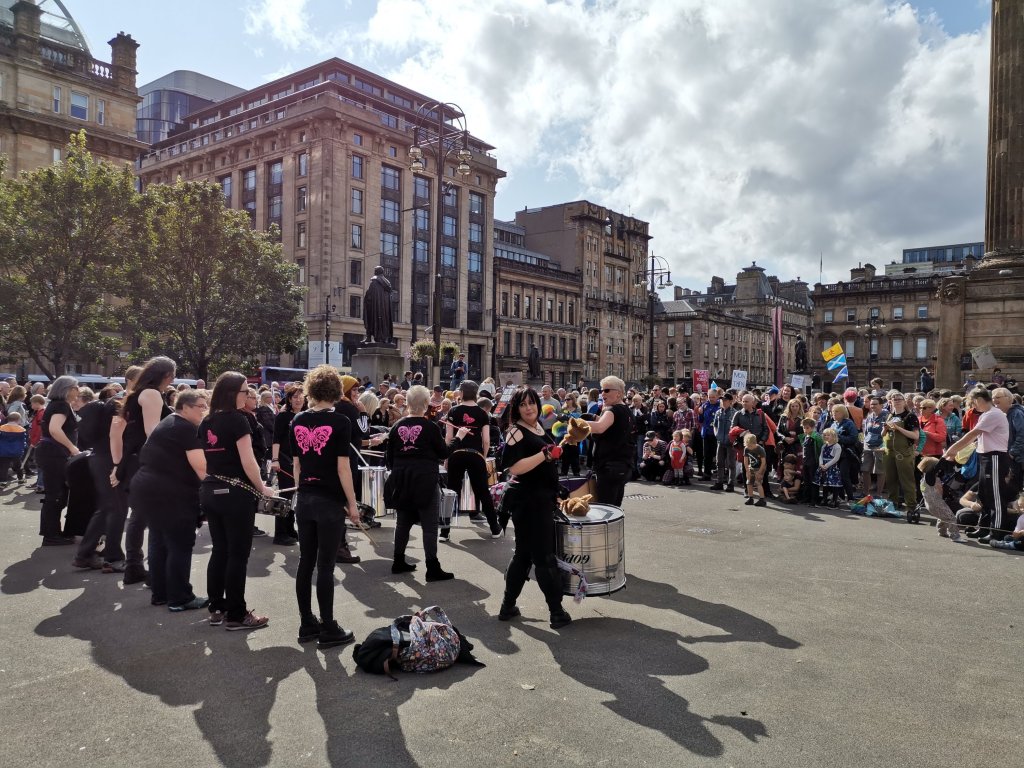
One of many protests attended at George Sq.
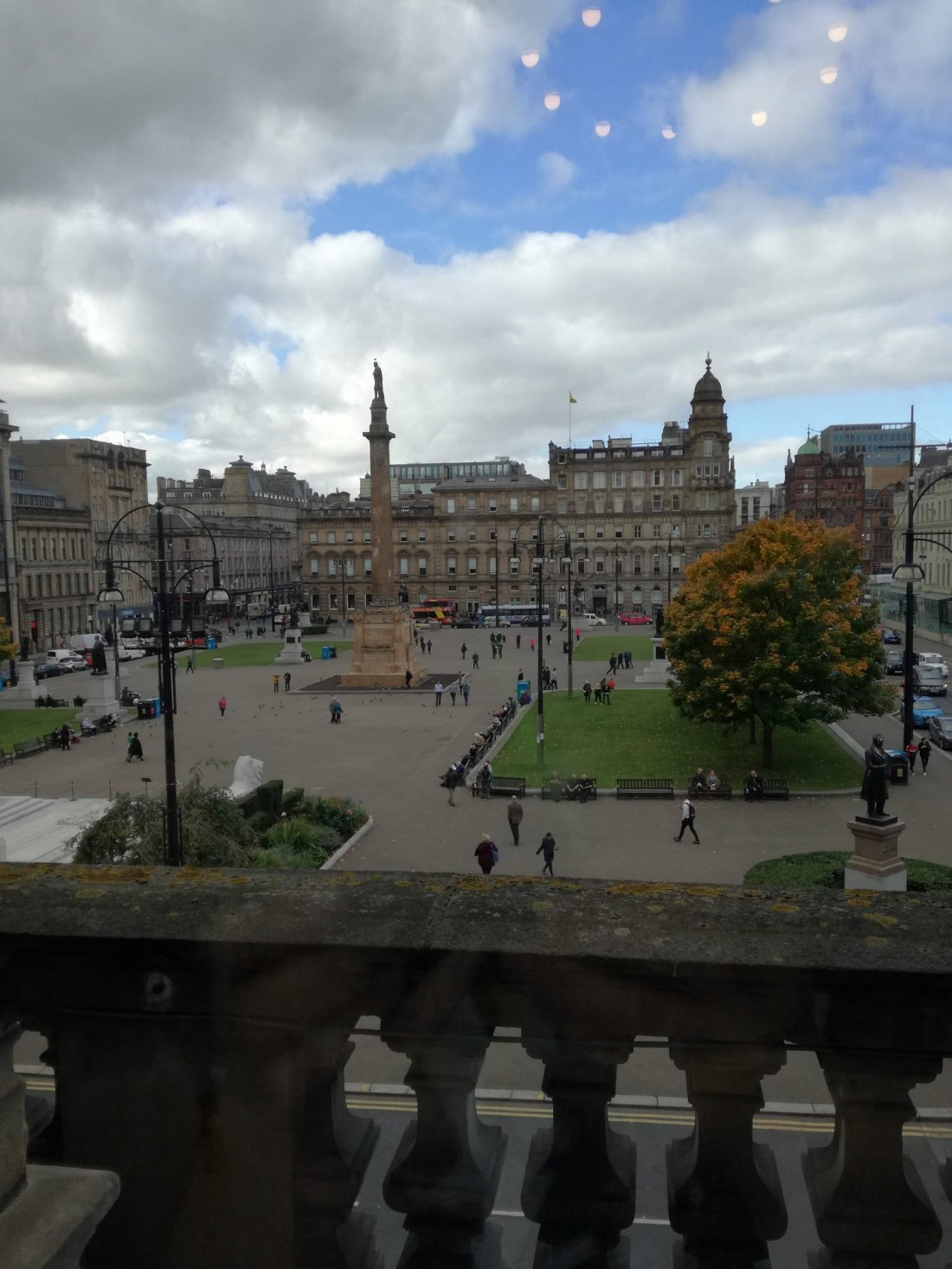
My first job in the city was as a breakfast waitress at the then “Copthorne” Hotel. I was given as my ‘station’, one of the conservatories overlooking George Square, probably the only good thing I have to say about the experience. At 17, with a 4.30am start, it was not a job I enjoyed but in brief moments of calm in the early morning before the city woke up, I remember having the sense that I was seeing a side of Glasgow, most Glaswegians never really got to see. Amongst my other world voyeuristic nosiness, I could watch the light fall on the statues of the Tobacco Lords and as I waited for the first hotel residents to descend, think about who those cold dark figures were and what their legacy meant.
Learning a little, not least from the rooms named after them in the hotel at that time, it made me uneasy when tourists sometimes asked what the statues were and commented on the grandeur and beauty of the City Chambers which looked on to them. As a late Victorian Building, it is separated by many decades from the practices of slavery which were the trade of those in statues below. It is almost inconceivable however that Glasgow would have built such wealth and status to enable the glories its Victorian Architecture, without the foundations of wealth brought to it by the Slave Master Tobacco Lords.
View of George Sq from inside Glasgow City Chambers, taken during a meeting
As a Councillor, I now visit that building fairly often but regardless of the meeting or occasion that brings me, my steps on the cold marble staircases click in my mind in a hollow echo. Their shallow ring rhymes the story through my thoughts of what this magnificent place is built on. No matter how beautiful the artistry or opulent the surroundings, just being there gives me that cold uneasy feeling, that I am walking, in privilege, on the sacrifices of others, through our inherited collective wealth that still persists.
I try to tell myself that it is not my fault that the slave trade existed hundreds of years ago, I was not around at the time & I can’t help where meetings are held, just as I shouldn’t prevent myself from enjoying the surroundings of the gallery of modern art, despite its original owner. I feel compelled however to force myself to think about the fact that the whole wealth of our nation (relative as it is), the chances and advantages I have grown up to enjoy and our overall collective wealth, was built in a large part on the backs of those who suffered enslavement, unspeakable injustice and the worst of man’s inhumanity to man.
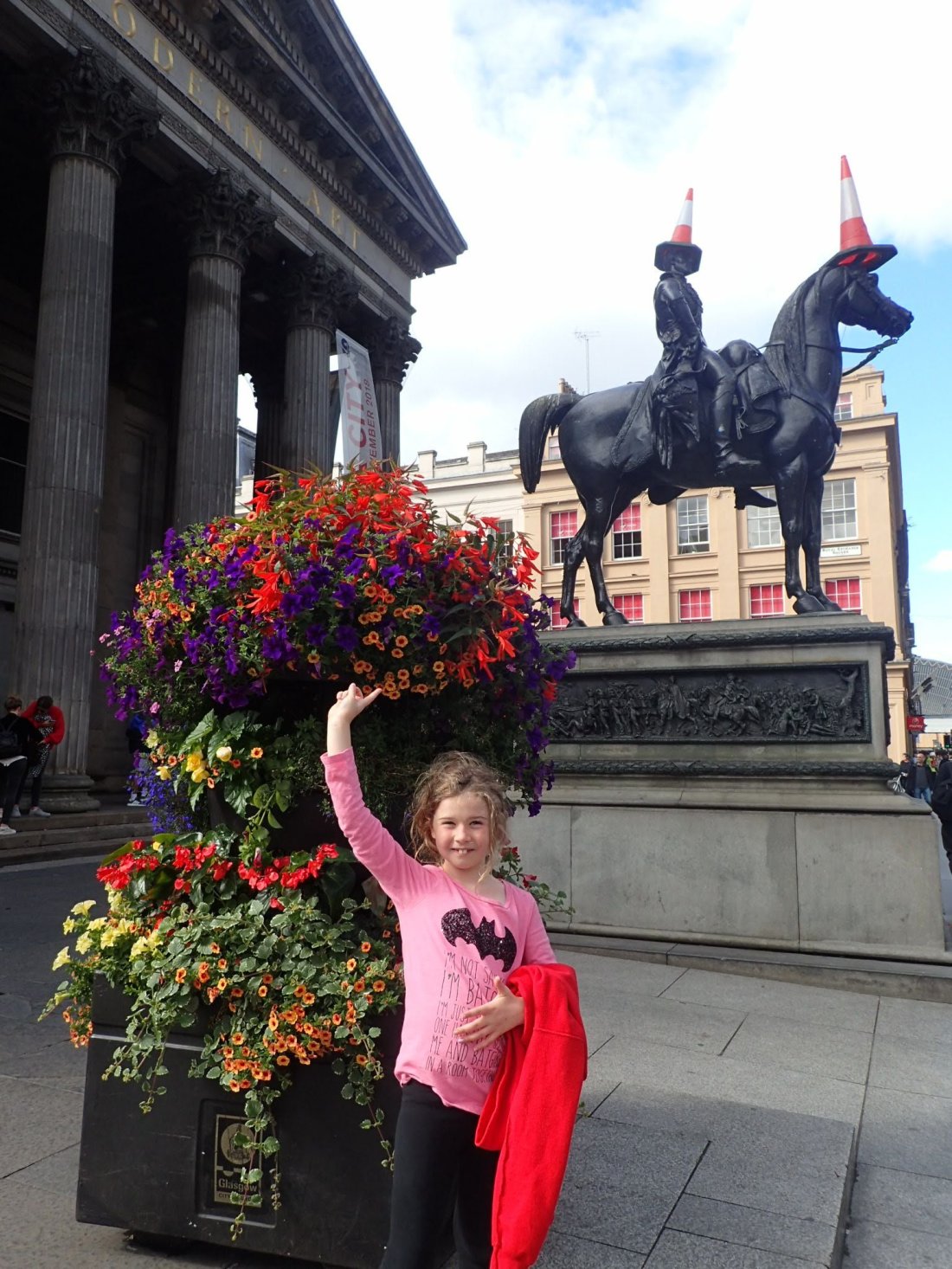
Typical & obligatory photo of my youngest outside Glasgow’s Gallery of Modern Art, one a Tobacco Lord Mansion
For that reason alone, I think it is worth these physical reminders of our abhorrent history to be preserved and visible. I do however think they need to be set in context and as such, never in one which seeks to glorify or hide the truth. I would in no way object to statues being taken down and put in more appropriate settings where their history could be explained but I do think there is danger in removing them from existence altogether, that we will lose the painful reminders we need, that this is indeed our history.
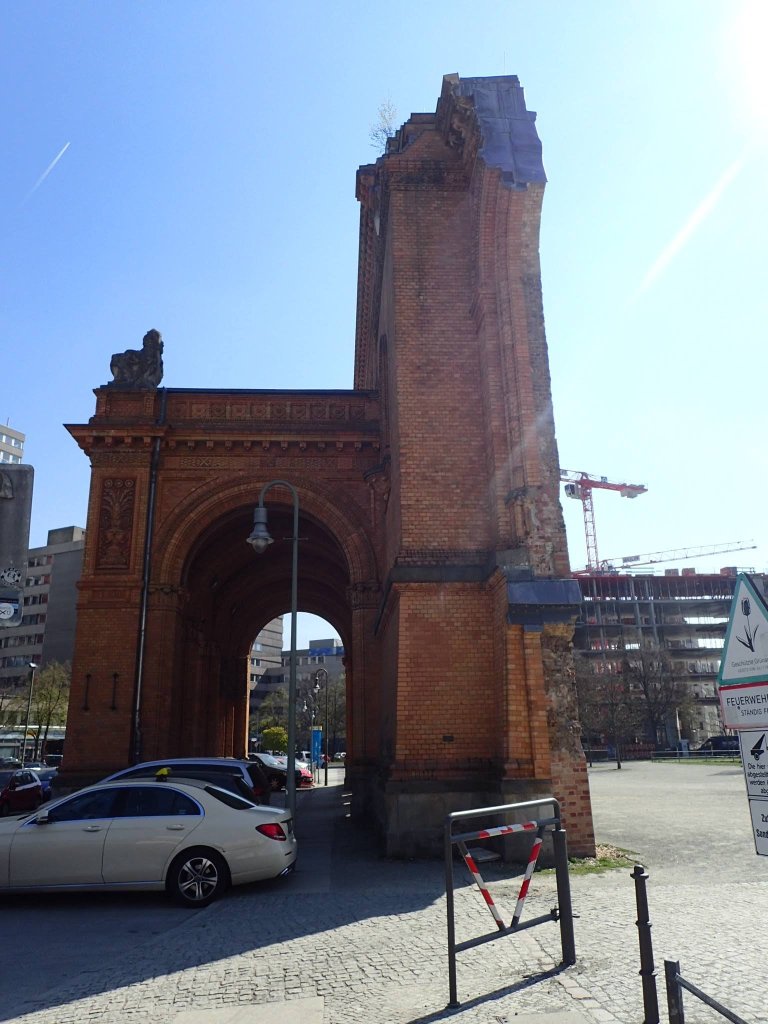
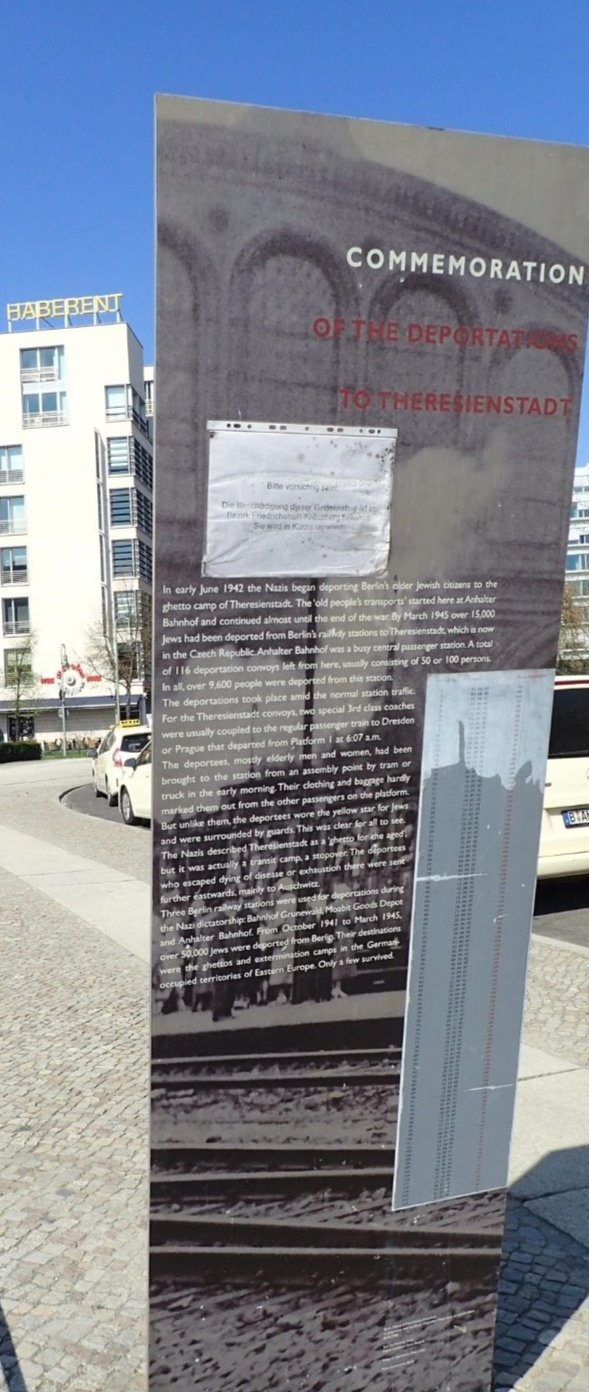
When in Berlin last year, one of the monuments that took me unawares was the remains of a train station facade, one side being all that was left standing of its undoubted former grandeur. There was something eerie about it just being there, seemingly out of place on an unassuming street, on the way to one of the museums we were visiting. It was left standing presumably as an important reminder to all who pass by, that here, surrounded by apparent normality, was the location where the persecuted and oppressed were shipped out to concentration camps. As others kissed their sweethearts goodbye and made their way to their places of work, others, just across the platform, where in full view, at the start of their voyages towards death and unspeakable suffering.
BERLIN’S ANHALTER BAHNHOF – HOLOCAUST DEPORTATION STATION
I read the plaques there with time and solemnity, as I did at many locations in the city. Reflecting on the horrors of their own history, telling that story and understanding the danger of denial, lest the same fate repeat, felt to me something that Germany was doing pretty well.
I have long since felt that this is not something which I could say about the way we treat our own history in this country, meaning both Scotland in its own right but in large part also, the legacy left of being part of the “British Empire”. In the same way that the fundamental question “how could people have sat back and allowed this to happen” applies to the Holocaust, it surely must apply to the slave trade too.
Plaque explaining the role of the station in transporting Jewish people to concentration camps
We would like to think ourselves different, more educated, less ignorant than our Georgian ancestors but personally I think the real value in understanding history is trying to place ourselves in comparable scenarios and ask what we can learn from them, ask indeed, if we are really any better or doomed to make the same mistakes.
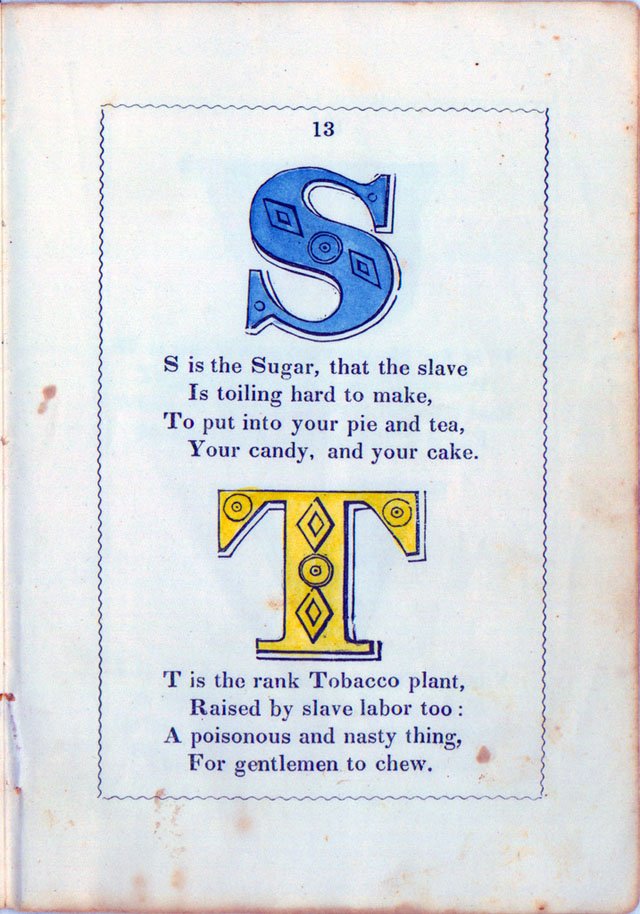
If I was a (young) Georgian lady putting sugar in my tea, would I stop to think where these commodities came from? Would I be ignorant of the way they were procured and brought to me, of the suffering behind my one lump or two? Or would I just choose to be?
Would I smoke a cigarette knowing of the blood that had flowed to bring it to me or would the significance completely pass me by. I suppose what I am asking is, are those who benefited from the commodities imported, blameless in that suffering? If we hang it all on the men in the statues, are we forgetting that it wasn’t just them who allowed slavery to happen?
An English Family at Tea – Joseph van Aken (c.1699–1749)
I ask this because, as a trained historian, I feel my studies of little value if we aren’t going to reflect on what “we” in the here and now can really learn about ourselves from history.
How culpable am I in the suffering of others? Has the smart phone I am writing this on been brought to me on a platter of modern day slavery and suffering? I like my chocolate bitter and my tea a little sweet but whose tears are falling to bring me these? In so many ways, with our clothing, our technology, our food and commodities, are we simply repeating the same horrors of the past and using the same excuses that it isn’t our fault, we aren’t the slave owners or exploitative factory controllers and we don’t want anyone to suffer for us.
Would the Georgian, tea drinking, me, not have said the same?
The anti-slavery Alphabet, Anonymous, 1846
When I think about those who are predominantly suffering in the industries where modern day slavery and exploitation still exists, it isn’t surprising that those people, in the main, are not white. The legacy of racism within our countries here in the west, our institutions and our culture is very much with us and we need to address that within our shores but we need to also open our eyes to the fact that Black Lives Matter, wherever they are and the turning of blind eyes and the pushing away of the unseen and inconvenient is what also allows racism to stay a living global pandemic.
Fundamentally, I feel we need to better explain and examine our history from the point of view of how things were able to happen and how things are able to keep happening. The train station in Berlin reminds me that I must consider and remember what humanity is capable of and know that as a human being, it is dangerous to forget or think myself above that.
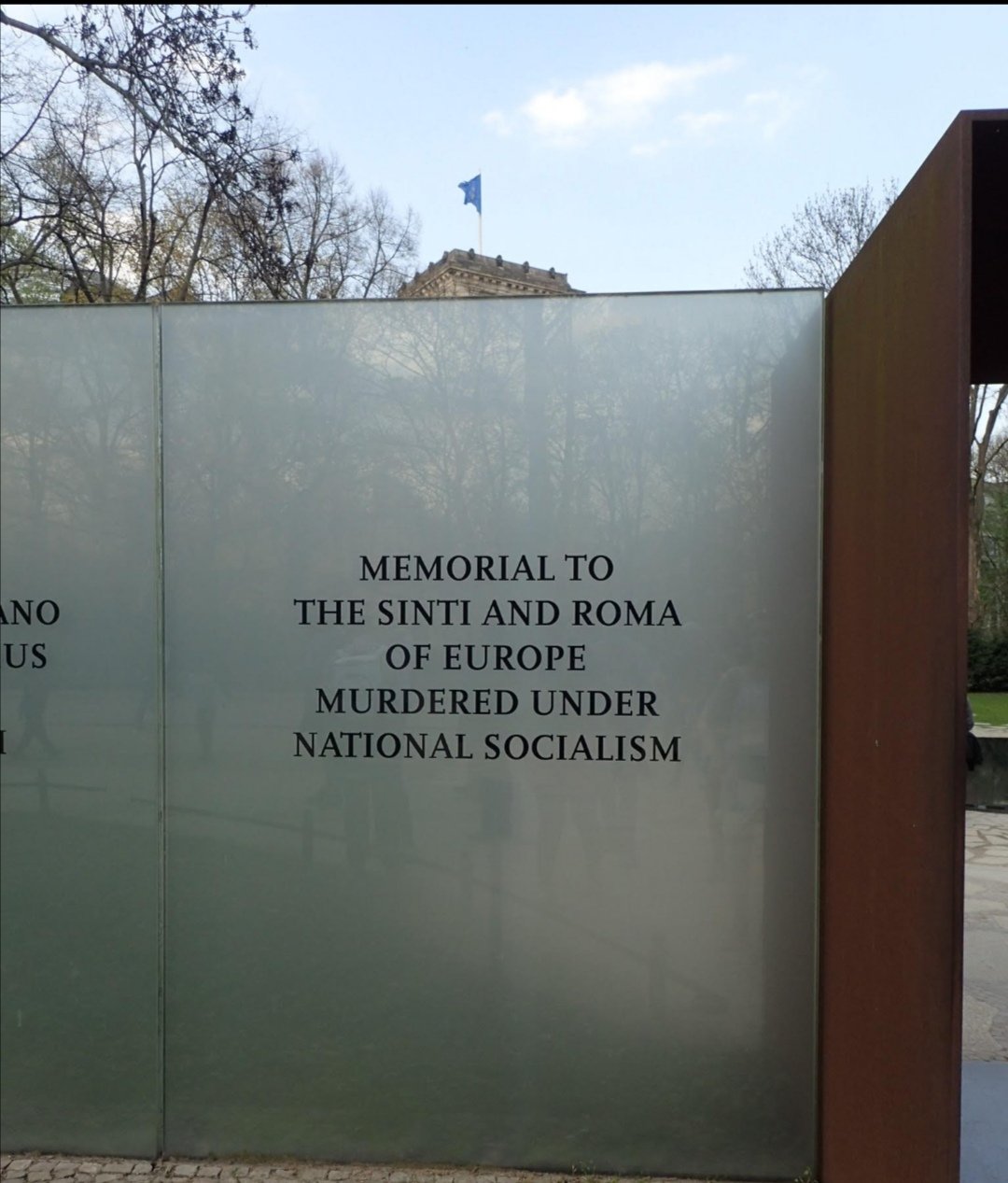
Memorial to Roma and Sinti People in Berlin
Let’s have a serious debate about what should come down, get renamed and where statues should go, but let’s not erase this shame from history, lest we forget that it is part of our own past, our own shame, our own wealth. We must understand and own it before we can move on entirely. If we don’t consider how it could be allowed to happen, we may be doomed, as is always the fear, to simply repeat the mistakes which we say we loath so much.
If people made Glasgow and not Tobacco Lords, we truly need to think about all the people who suffered for the legacy of this beautiful city and what that says about us. I want to be able to explain George Square to my children without shame when we visit, that doesn’t mean erasing our history but it does mean listening to what it can tell us about ourselves.
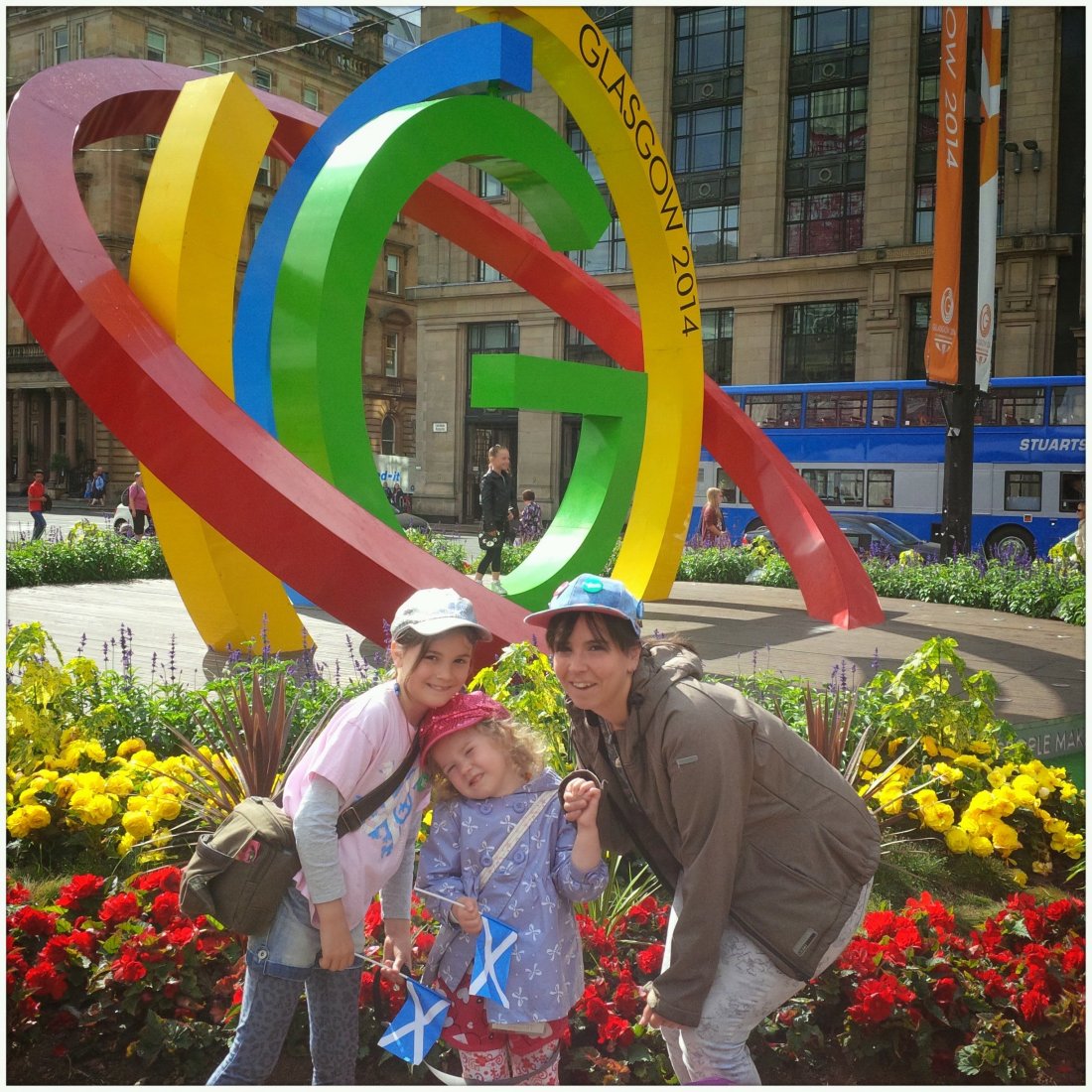
People make Glasgow and Glasgow makes Memories


 Lift As We Climb