Let’s try this again shall we: Towards a Diverse & inclusive Council : reloaded

https://www.falkirk.gov.uk/coins/submissiondocuments.asp?submissionid=18842

Like the motion yesterday, I don’t wish to go over old ground because I believe that what was brought forward during the motion in November was a detailed and reasoned explanation of why we needed to be committing as a council to do what is within our power, to move towards a diverse and inclusive council.


Though it is only one small part of the overall motion, that I will shortly again move, Action point 7 states:
To be leaders by example; embodying in conduct & language during all meetings, public and private, the welcoming and respectful environment that Falkirk Council considers critical – between other elected members, officers, staff and public, over and above minimum legal standards.

Not that anything in the motion should cause division, but To be honest, I thought that this should be the least controversial statement of the recommendations.
These are simply the standards of “Civility in Public Life” – something which the updated code of conduct for councillors, and indeed the old code, are based on.
Duty
Selflessness
Integrity
Objectivity
Accountability and Stewardship
Openness
Honesty
Leadership and
Respect

You don’t really need to have much of a long memory, 24 hours will do, to see that if this is something that we already do aspire to, as is our duty as elected members, we are not really knocking it out the park in terms of demonstrating it. We might not always have a scoreline of 6-0 or even 4-1 against when it comes to that, but it’s at times difficult to find meetings where we are collectively even achieving a no score draw.

And that does put people off from standing and becoming part of elected life,
Because, unjustified though it may be, given how hard members work across this entire chamber, the hours put in and how seriously we take the crucial responsibilities we have, the image that is projected by meetings like yesterday doesn’t fit with that and I think it does none of us credit collectively if we allow that view to be how the public sees us.

As I say, I didn’t actually anticipate talking at all about that part of the motion but I was embarrassed by some of the discourse yesterday and it’s something I am glad is highlighted within the motion and I hope members will agree to reaffirm this today.


I spoke extensively last time round on the need for greater diversity in politics in general, and how important it is to represent that topic accurately and responsibly. So I just want to again clarify that this isn’t about tick box exercises or trying to bring some fluffy wooly idealised notion of diversity and equality that we can then just ignore.


This is about the fundamental principle that we achieve decisions which are more representative and therefore more relevant to the constituents we serve, if we have a more representative democracy model and that means having elected members around the table that reflect the richness of our communities too.
Unconscious bias training will help meantime and it is essential to revisit periodically too but it is a poor substitute for proper representation. For nothing about us, without us. Underrepresented groups cannot continue to be relegated to be served on the menu, they, we, must have a seat at the decision making table, with a voice to be equally heard, alongside others.


Like the climate change topic we debated yesterday, of course we cannot solve the shameful lack of diversity in local government as a whole, by words or even actions, here in Falkirk Council. But that doesn’t mean we should do nothing or engage in whataboutery that only leads to further inaction and finger pointing.


We should be doing everything possible we can, within the sphere we are in, and that is what this motion was designed to do by identifying some practical measures we could take forward and the initiatives and work of others which we could support.
I was sad that it was bumped and I felt, not given the time, again with the other motion on that agenda, that it deserved as a serious stand alone item. Not one that would be inevitably buried at the end of a massive full council report. But here we are.


I’m glad however that the report which has come forward, essentially demonstrates the competence and need for the measures asked for in the action points of the original motion, though if I am honest, I feel it was unnecessary to burden officers with producing yet another report in such a short timescale when they have so many other pressures to attend to and we could have debated this and had answers to these questions during the special council in November.


I thank officers for the work they have done however in demonstrating the validity of this motion and accordingly, given one additional suggestion has been put forward in the report which fits the motion, and in order to avoid future duplication of work for officers in this regard, I am happy to add an additional action point within the motion.


This is in view of an existing Equalities champion position which has remained unfilled, which is detailed in council’s Equal opportunities Policy. It is suggested that this be widened to the title of Equalities and Human rights champion. I think that this is a welcome suggestion and in order to ensure that this position can be properly scoped out and filled at the same time as the Young People’s Champion asked for, I am happy to include that as a new action point in the motion which will be circulated in writing shortly.

It is clear from the report that the equalities duty applies to every function of the council and that includes the decision making functions and all policies and practices of the council. It makes it clear that this extends to the conduct and behaviour of elected members also.
The practical measures such as giving more prominence to the availability of EPIAs in reports, with a clear link highlighted and available to elected members to consider ahead of decision making, are important and will help elected members to give better scrutiny and consideration of these matters, while executing our legal duties under the equalities act in decision making.


I would also like to add one small addition to point 6 of the motion which refers to the Cosla cross party working group who are working on removing barriers to underrepresented groups in becoming elected to local government – and indeed finding ways to retain them once they are elected, as many leave for a variety of reasons after one term.


I was disappointed that opposition members laid accusations of this motion being brought for political motives last time round, and indeed I referred to the cross party work of members and groups of all parties and none in my summing up. I again wholeheartedly praise the work of Cosla President, Alison Evison, a Labour member, and found her recent evidence to the Scottish Parliamentary committee on Local Government on this topic, to be absolutely spot on and very necessary. If you haven’t watched that evidence session, I would recommend that you do. I thank her for using her platform to say the things which many of us believe need saying and I hope we can as a council, support their work.


It’s not a criticism of officers, merely an acknowledgement of the fast moving and many layered topics in this work, that there are some omissions from this report in terms of that work and I am accordingly suggesting that we invite Cosla President Alison Evision to brief Falkirk Council members on what that contains. Alison has indicated that she would be very happy to make time to do so if diaries allow and I thank her for her supportive words whenever we speak on these matters. It must be truly a collective effort.


I hope that this demonstrates the commitment of the administration in bringing forward this motion, in a non party political way but instead in the spirit of making progress towards a truly diverse and inclusive council, which will benefit all our constituents, the quality of decision making and I dare to hope, the tone and constructive environment of meetings to come.
Parity of Esteem for Local Councillors : Speech to SNP #21

Conference, we have so many insightful resolutions on our agenda, touching issues from education, to children’s rights, poverty, climate change, justice, to housing and equal pay.

All of these issues involve local authorities and local councillors as decision makers in them. 

This motion is entitled Parity of Esteem for local councillors and you have just heard how Pay is one of the single biggest issues in that and the effect in particular that financial barriers have on diversity within local councils –This is as concerning for the future of my brand new adorable baby nephew Dylan, as it is for his 97 year old Great Grandmother May, now in full time care. 

Conference, like becoming a new parent, there is no manual for becoming a councillor (though at ANC we are trying!)  and you have no idea what you are getting yourself into until you are several months through the door. Every council, every ward, every situation is different but there are some common truths.

Firstly, you will never ever get to the bottom of your case load, the briefing and committee  papers to read next week, the calls you have to make, the research you have to do to learn enough to make informed  decisions, the meetings you can’t possibly all attend, the community events you know it will look bad that you don’t turn up to, or  indeed the endless enquiries, comments and jibes on social media from people you can’t really ignore, because they actually do “know where you live”.

 – but there is only one of you – and as Heather outlines – you have to do all those things and much more besides – by yourself.

 As well as more pay and more respect for the role, Councillors also need to see changes to guarantee a consistency of support to do our work and that will take national change.

I mention respect because, I think it is crucially lacking at times, even sometimes internally, and while we must work to find common cause with all parties on this, we must also lead as a party and not be afraid to do so.

Councils and Councillors should never be an afterthought in the development of policy, because we are at the heart of delivery and will take the heat for it too, in very direct and inescapable ways.

Conference:

We will not solve the climate crisis without bold and brave decisions from local councillors

We will not deliver quality education for our children from early years to further education partnerships, without them

We will not bring the economic change and upskill our workforce without them

We will not deliver vital housing

Plan our communities

Revolutionise our transport network

Protect our children

Care for our elderly, deliver social care,

Empower our communities 

Protect our citizens

Or survive another pandemic, without them.

Do we want the vital decisions on these matters and their delivery only in the hands of those who can afford not to work, are in privileged working positions to be allowed to take time off, or are so overworked and stressed about their finances and letting down their families, that they are constantly exhausted and can barely function, purely because they want to do their best for their communities.

Is that really any way to run a vital branch of government that delivers so much for our citizens?

Being a councillor is a role but we are workers too. Hard workers, Vital workers. We should not be afraid or ashamed to say so, nor that we deserve a fair level of pay for the work we do and the responsibilities we have.

Conference, we have so many talented councillors, and you have heard many of them speak this weekend. Please support this resolution and send a signal to them that you value them and that we will work as a party to get them the parity of esteem they deserve.

Elected Member safety

Speech Seconding Motion to SNP Conference (November 2021) , Focus on Diversity & barriers this represents to underrepresented groups

Delegates, in only a few short months since we briefly touched on this topic at our last conference, some truly tragic events have unfolded and our thoughts are very much with the family of David Ammes and all those who loved him.

His tragic murder, like other serious incidents before, has rightly brought focus and unity over the importance of elected member safety 

 but, as with earlier events, there is real concern that expressions of unity will be short lived and that unless action is taken appropriately within multiple spheres – little will actually change

 I therefore welcome that we are debating this resolution today.

We must recognise that there are these multiple spheres and that we – not just the party but all of us individually – inhabit some of those spheres too .

While rightly calling on action from others we must also follow through with meaningful internal reflection, put recommendations and reform into practice, and be seen to do so – not only print them as procedure or principle in online documents

I’d echo Jen’s sentiment that until very recently, local government has been a  poor relation in consideration of safety for elected members, despite the best efforts and hard work of many, though there are some welcome signs that this is beginning to change. 

There are so many horror stories, from firebombing of cllrs houses, to death threats and violence, harassment, intimidation and of course a great rise in online abuse. Studies have borne this out, not only through the excellent work that the likes of COSLA and “Elect her” have been doing but also within our own councillor cohort, where ANC studies have shown concerning metrics  about the impact of feeling unsafe has had on our own members  considering that they may not wish to stand again. 

Elect Her rebranded from previously being “The Parliament Project” but there is a concerning need for a “re-elect her” focus too, particularly because of the experience of women and other underrepresented groups currently serving. It’s a great source of personal sadness and I realise impolitic to say but on behalf of dozens of other councillors who have repeatedly said exactly the same to me privately, there is rarely a day that I don’t consider standing down after 1 term  because of the impact that this role, as much as I love it  and would feel crushed to leave it, has on our families and emotional well being.

It’s fine to acknowledge this of course – but what can we do. Some of that is outlined in this resolution, which I hope you will support – but essentially there has to be a sustained, coordinated and collective effort. Elected members need to show leadership themselves in their language and behaviour, our institutions need to put practical measures in place and have further enforceable regulation, our police service need to continue to improve their increased support & engagement and social media companies need to step up to the mark. Legislative reform and regulation is also needed and standards& complaints functions need to vastly improve to inspire further confidence in their ability to tackle issues.

AS a party, we need to be clear too however that elected member safety is important and that putting that aside & engaging in higher risk activity for political gain and electoral advantage, however well intentioned, is not acceptable. It cannot be a criteria for office, even subconsciously, that you are more suitable for the role if you are willing to accept putting yourself and your family in danger or more hardened to accepting abuse and threats than others. This has affected diversity in politics for many years but recent advances are under threat because the abusive environment has got worse.  

Please support this resolution in order that improvements to elected member safety are given the importance they deserve and that we commit to a better standard of politics that does not tolerate the abusive environment which leads to escalation and puts this under threat. 

Towards a Diverse & Inclusive Council

Speech moving motion to Falkirk Council on 10.11.21

https://www.falkirk.gov.uk/coins/Agenda.asp?meetingid=3407

In moving this motion, I have to confess that there is a part of me that whispers that I should express a measure of gratitude to members in allowing me the opportunity to do so – but – over the course of thinking what I was going to say today, I’ve concluded, that this is the result of ridiculously deferential conditioning – so I am not going to.

We should be debating this and I shouldn’t feel privileged to be moving it. 

Because,

In reality, action to acknowledge that Diversity, Inclusion and Equality are actually important in a functioning representative democracy at local level  is long overdue.

These words – Diversity – Inclusion – Equality –  have generally positive and aspirational connotations to me but uttered in certain spheres, often come with huffing and puffing from those who see them as nothing more than concepts pushed by the much derided “snowflake generation” or indeed upstart feminist disrupters.

Heaven forfend there are any of us in those categories here.

But the serious point is – do we – or do we not ??? – believe that democracy is richer – that decisions are better – the more diverse and representative those sitting round that decision making table actually are?

If we do, then it’s incumbent on us, as those round that table, to acknowledge the lack of diversity overall in local government and do what we can – limited though it may be, to try to combat it. 

It’s often quoted that “if you are not at the table, you are on the menu” something which in recent decisions at council I have begun to feel particularly acutely when it comes to generational issues.

Despite the fact that increasing diversity in Local Government is one of COSLA’s key priorities, and the work done on a cross party basis to advance this however, I know that there are some members who would have wished this motion to go to Executive (if at all), but given the further limitation on diversity that this would place on debate, that only gives further concern. I concur completely with other members when they express their respect  for Councillor Collie for example, but I am afraid those words ring rather hollow, if they are denying her the opportunity to take a full part on a motion in her portfolio, that affects families of all ages across Falkirk. And this pattern, whether it concerns, poverty, climate change or any number of universally important topics to our constituents, is yet another reason I have lodged this motion today. Recent meetings are another.

I make no apology for being angry about and bringing up the recent Full Council meetings. Indeed, I was again horrified by the expression of deference towards “our forefathers” having made wise decisions, decades before I was even born– and I am by no means  a “young person” – as an apparent factor in decision making. To be blunt, it’s of no relevance whatsoever to our current decision making what our forefathers  thought. I don’t know that there were any foremothers either, which pretty much illustrates its own point, but the same holds true. This was arguably the most important decision that our council faced in many years but it was made without the voices of the generations it would effect most, being considered front and centre by those proposing it.

I could quote all the various national statistics but we don’t need a complicated or detailed survey to see where the disproportion lies in this chamber and that’s despite the absolutely wonderful election of my new colleague Cllr Russell, who I am delighted is going to be following me in this debate. 

Respected and valued though they are, we have 4 times as many David’s and twice as many Robert’s elected as members under 40, we have had budgets where less than a fifth of members voting successfully for the entire annual spend of the council were women. The entire cohort of women on the opposition benches would only be enough to fill the elected membership of one of our smallest wards.  It’s not that all women, men, young, disabled or BAME people have the same priorities and views as each other – of course not –  nor that any demographic has superiority or greater right to be represented. Quite the opposite.

It is the lack of balance, the lack of diversity, which is the issue and the effect it has on our democracy and the decisions which we make.

What this motion calls for is an acknowledgement that this is an issue and to take action to do what is within our power to try to mitigate it. So I would like to outline a few of those measures briefly:

Firstly, that we all suffer from unconscious bias, myself included and that without an awareness of this, our decisions are likely to be affected by a variety of different forms of bias. I know Cllr Russell intends to pick up on these themes, so I won’t go further down that track.

So further training as standard is essential, but so too are other parts of this motion, such as enhancing the role of EPIAs and addressing the tone of debate and discourse, which I believe make this a less attractive atmosphere for underrepresented groups, as well as just being downright rude at times.

And yes – I make no apology for saying –  sometimes sexist and misogynistic in tone too. Examples can be provided but in the interests of brevity, I’m guessing most would rather I didn’t. Though if anyone is minded to 19.1 me, please try not to address me as Young Lady in your opening remarks.

Whether it’s this, or e.g. being asked what lipstick you had on to get a result on a local issue with an officer, their root comes from the same thing, a lack of  respect – a demarcation of being different in value to others, and when  that is highlighted, especially in public, it’s clear that we are not held in equal esteem to others. 

So, there are parts of this motion designed to address that issue, to highlight that whether from elected member to elected member, or indeed with officers and staff, standards have not always been what they should be, and this presents a much less welcoming and conducive environment to others who are greatly needed to increase the diversity in the chamber. 

Finally – If you can’t see it – you can’t be it. Something always brought home to me walking past the portraits of our entire history of male provosts on the way into council. I’m pleased that our SNP group here has a rare female majority with recent results. It isn’t enough though, because as Prof Mary Beard observes in her book, women in power, the institutions we are elected to, expect us to instantly change and conform to fit into systems designed by men, for men….and if we don’t, it’s us who are not fit for the job.

We have opportunity with more flexible arrangements made possible by new technology, to consider more fully the needs of others, be they in a variety of caring roles, those with disabilities and those with a wider array of less secure professions, which will also help the younger demographic in particular. That isn’t to say that the needs of those who may need support within a physical meeting environment are any less important, and I acknowledge and respect that – but minority groups are minority groups for a reason, and the needs of the majority shouldn’t be the thing which disenfranchises them.

Again, its is all about balance. Balance, respect, and a commitment to acknowledge the problems we have with achieving diversity and that while we are the poorer for it, we are determined to do what we can and to support the work of others externally in doing so also.

If making a commitment to inclusivity and better, more flexible arrangements makes it more possible for even a handful more BAME, young people, women or those with disabilities to have the reassurance to see themselves as a councillor, then we should do it and we shout about it.

There is little doubt in my mind that enabling change within the council is long overdue on this topic but that recent decisions and the coming election make this more acute than ever. I would ask the whole chamber for their support therefore, not only with the motion but in a commitment to embody the spirit of it to improve the quality of democratic debate and decision making for the good of Falkirk’s citizens.

https://www.dailyrecord.co.uk/news/scottish-news/diversity-call-for-falkirk-council-25414581

https://www.falkirkherald.co.uk/news/politics/falkirk-councillor-says-telling-women-to-go-to-standards-commission-over-sexist-behaviour-is-not-good-enough-3455726

https://www.falkirkherald.co.uk/news/politics/council/snp-anger-as-climate-and-diversity-motion-delayed-by-labour-and-conservative-councillors-3454359

Why “the Climb” Matters

INDEPENDENCE – Eyes on the prize… Let’s remember we all have the same goal… Unite for Indy…it doesn’t matter how we get there, or who delivers it….

Really?

Sorry – no. It actually does matter.

It matters an enormous amount, because in order for Independence to be delivered, we don’t just need people to vote for it through the back door, we need people to believe in it and be prepared to stand by our Parliament to deliver it and see it through.

Trying to manipulate an electoral system for one end, and one end alone, is exactly the sort of sleazy, underhand skulduggery that the public hate. Electoral game playing might be fun for analysts, single issue campaigners and political hacks but the public will not be impressed with this approach in the slightest.

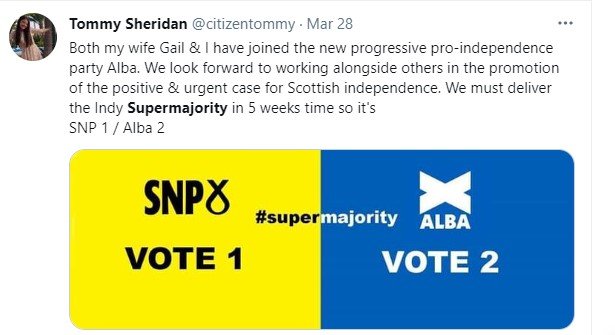
Yet these “calls for unity” have been bandied about endlessly by those splitting off to Scotland’s newest pro-independence party – Alba – and those supporting them, over the past few days.

We are to unite in the quest for a “Supermajority” for Independence in the Scottish Parliament, embrace tactical list voting and strategise to get as many Pro-Indy MSPs in as possible, no matter if the public may ultimately rile against that.

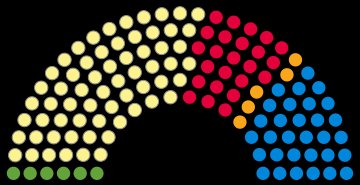
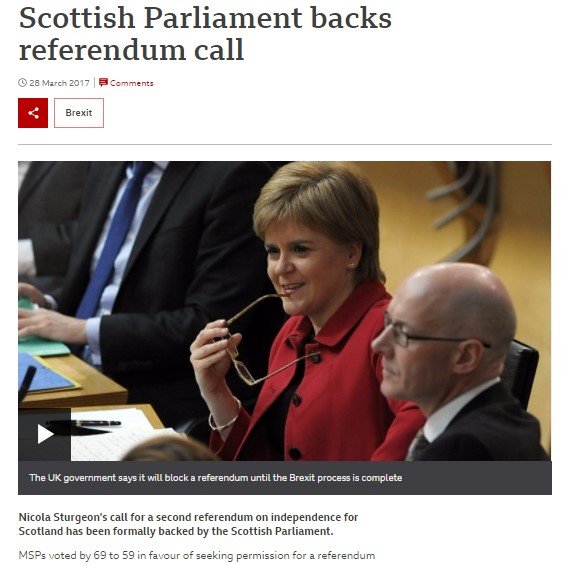
But, hang on…. I seem to recall that we already had a majority for Independence in the Scottish Parliament in the last term. That we already actually held a vote, during that same parliament, in favour of a referendum….and funnily enough, won that vote.

Balance of Pro-Independence Parties after 2016 Holyrood Election

Whatever superlative you want to stick next to the word “majority”, combining SNP & Green support in that parliament, meant we already had one.

What we didn’t have, as a party or as a movement, was the pressure that came to bear from one party having an outright majority. A “system breaking” majority, that conferred the ultimate, unequivocal decision, of the Scottish people to unite behind that one party & one vision. The power & momentum that, when the SNP broke the system in 2011, helped to deliver the referendum of 2014.

Parliament voting for IndyRef2 in March 2017

We cannot forget that the reason we were able to return so many SNP MSPs in 2011, was through an unprecedented amount of the electorate giving their “Both Votes” to the SNP. That enabled the election of a large group of additional members on the list vote, to achieve a majority.

Over and above the tactical & the political however, there is an even more important reason for me, in the question of how we get there.

To be clear – I want Independence.

I don’t want it at any cost though. I don’t want it by “playing the system”, hoodwinking the public, or by stirring up division to get our own way. That is not going to deliver a stable democracy. I certainly don’t want it just to change the flag, the building we make decisions in or what currency we use in the shops.

I believe in Independence, so that we can have a much better society for my children to grow-up in. I believe the only way to achieve the priorities of the people of Scotland, is to have their own Independent Parliament, which reflects their needs, wants and ambitions.

Like thousands of others, I too believe we have everything we need in Scotland to make our country a successful, Independent nation, we can all be proud of.

But I also believe that creating this new, modern, successful country is going to be the most important and challenging task any of our politicians may ever face, this present year, perhaps not withstanding.

The people we elect to take us there are important. The people we trust in that institution, to give an oath to serve their constituents, equally and without prejudice and favour – to give care, thought, analysis and in-depth research and consideration of legislation – that is a vital part of the democratic process.

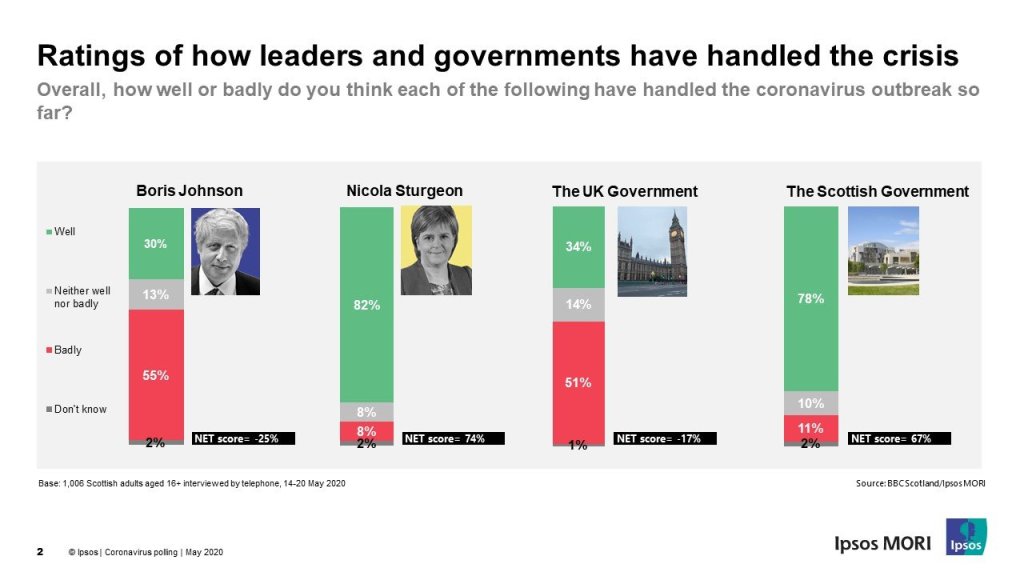
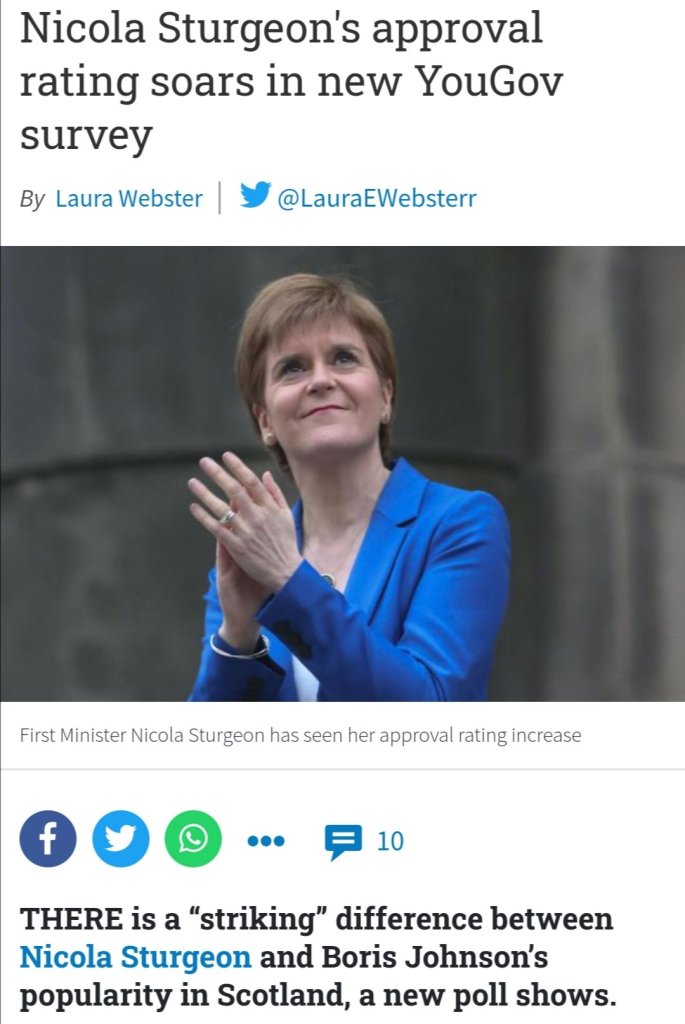
Nicola Sturgeon has drawn widespread praise for her leadership through Covid

The vetting arrangements for most political parties are long, arduous and very meticulous. These processes have their issues and sometimes wrong decisions are made that we come to regret, especially when they are rushed through.

Transparency from applicants is key in that process. Examining mistakes, reviewing social media, previous history and evaluating the skills, talents, commitment of the person applying, are all essential for the panel making the judgement. A candidate must be a fit and proper person, not only to represent your party but also each and every constituent who comes to them with their often heart-breaking, ultra-sensitive, and life changing issues.

In short, you have to be able to trust them. You have to know they have some basis of integrity, that they understand the requirements of public life, be prepared to live up to ethical standards and in general terms – be beyond reproach.

Nicola Sturgeon continues to be one of the most trusted politicians in recent history

This does not mean that they must be perfect or mistake / gaffe free, even if such a thing were possible, or that they can’t come from a variety of backgrounds, employment, life experience and educational attainment levels. The more representative of the society they will be elected to serve, the better for democracy.

But that’s not what you are getting with Alba – a party led by a man who should never be trusted in public life again, through his utter lack of contrition of the standards he displayed behind closed doors over his term in office. The parroting of judgements about “unfair processes” or being “cleared of criminality” is not a carte blanche to absolve the behaviour admitted to with employees of the government while in the highest office in the land. Criminality has nothing to do with this.

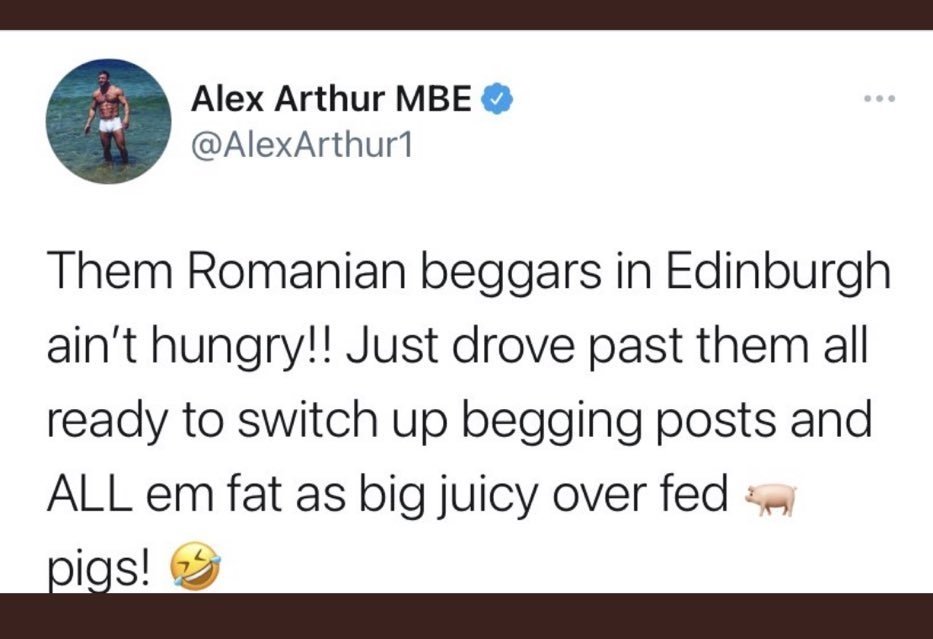
Just one tweet example from Alex Arthur – Alba Candidate

Why would you want people who have ever thought it appropriate to publicly disparage individuals on the basis of their race, ethnicity, body shape, disability or health conditions to be taking on the task of representing our communities in parliament, let alone forging the basis for our new country. Why would you trust a party who can’t even check the recent tweet history of their candidates because they are only interested in what’s in front of their face.

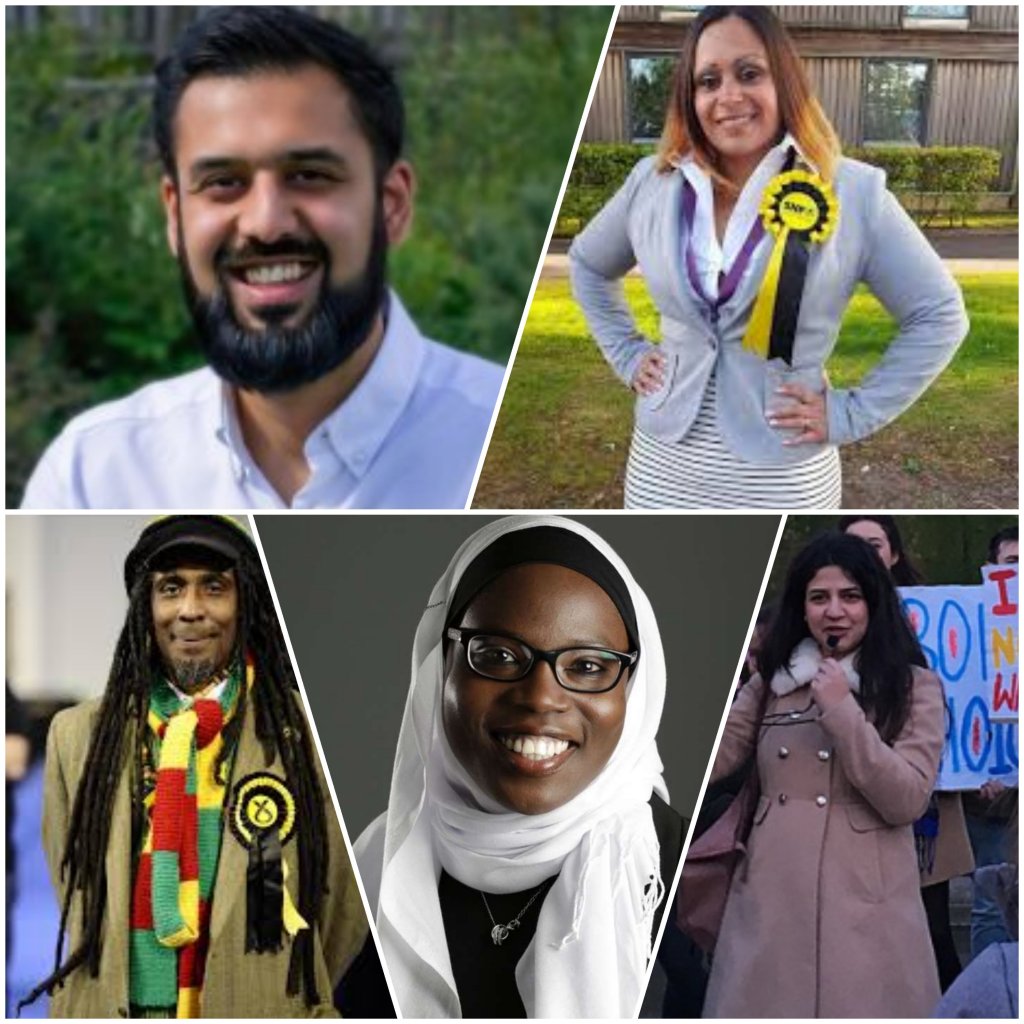
Why, would you want someone of the talent, integrity and potential of Fatima Joji to be overlooked in favour of an ego driven manipulator who has had his day? Why would you want a man who has publicly spread anti-vax msgs, riled against homeless people and fat shamed and teased HIV suffers, in place of the outstanding talent and passionate campaigner that is Graham Campbell? Why on earth would you even look twice at Chris McEleny, whose name is surely out of place on the same ballot as Michelle Campbell after some of his comments on hostile blog sites that have done real harm to vulnerable women, in ways he seems incapable of understanding. That’s without looking at the fantastic Roza Salih in Glasgow or Danish Ashraf in Central, to name only a few of the SNPs fantastic and diverse list of candidates.

Just some of the talented candidates topping the SNP Regional Lists – Danish Ashraf, (Central), Michelle Campbell (West of Scotland) Graham Campbell (Lothians), Fatima Joji (North East), Rosa Salih (Glasgow)

This isn’t building a radical new party with social justice, radical land reform and internal democracy at its heart. This isn’t even, “Independence, Nothing Less”. This is, “we want our own way, no matter what we have to do to get it”.

That isn’t democracy. That isn’t winning over the people. That’s the worst sort of “for the sake of it” nationalism, that has always stopped us winning over the trust of the people, who must not only vote for, but believe in Independence for it to be successfully delivered.

It isn’t that there is no place for Real-politick or considering the greater strategy of how to achieve your aims. There are quite a number of radical environmentalists in the SNP who would probably fit fairly comfortably into the Green party, but who believe that the best way of achieving environmental change in Scotland is through an Independent Scotland – which tactically, they can only see being delivered by a majority SNP Government. No matter how much respect they have for the Green Party, or those within it therefore, it’s Both Votes SNP – all the way – because that’s how to achieve a majority and win Independence.

How to achieve the ultimate aim – a fairer, more progressive, socially just, environmentally world leading, and peaceful Independent nation.

During the 2014 referendum campaign, the Yes movement worked hard to make it clear that the future of our country is not about liking or disliking one man or woman or relying on them to take us to a fixed destination. The same is true now. There is no Political Messiah. There is no place for ego fuelled conspiracy nonsense that lacks even basic scrutiny of motive.

There is policy, there is progress and most importantly, there are people whose votes deserve to be treated with respect and not like a game or a grand national.

We need to take a clear message to the Scottish Electorate and give them the positive long term vision of the country we want to continue to mould, for all our citizens.

For me, that means, progressive, socially just and experienced leadership. The clear choice is #BothVotesSNP